How are you? I respond, WONDERFUL. That is true, as I will explain to you.by telling you my story.
My Parents were immigrants from Czarist Russia and I was born in Chicago,
My SIBLINGS were three older brothers ……. Irving, the youngest, was 8 years older than me, and an artist.
As a child, I was seen as artistically talented and I too saw myself that way.
But I was also obsessed by the horrors of war In Spain and China, and I listened to threats from Hitler on the radio. I collected chewing gum cards about the horrors of war and I filled scrap books of newspaper images of violence.
Significantly, I felt I had to help people avoid such violence. Moreover, I believed that I was obligated to do that.
I left high school early to study art in Mexico, where my brother, Irving, was living, attracted by Mexican muralists. A year later I returned to the States to go to the University of Chicago. I thought I would learn how I might help counter mass violence. I discovered Sociology and I loved it. But I realized I could not work intensively in art and also in my sociological efforts to advance peace. I chose the academic path to advance peace.. I took that path in my doctoral dissertation. In 1953, PhD in hand, I got my first academic position, as an instructor at Columbia University. I pursued some research and publications in expressing my thinking about mitigating violent conflict. Unfortunately my work was not valued by the professor who had hired me and my three-year contract was not renewed.
Fortunately, I secured a Fulbright Research award, spending a year,1956-57 in Cologne, Germany, studying how the European Coal and Steel Community might contribute to Germán-French reconciliation. I returned to the University of Chicago for a post-doc award and I published 3 articles analyzing the beneficial effects of the Community.
I then accepted a job as a research director at NORC, the National Opinion Research Center, to improve my research skills and to find a home. A mutual friend introduced me to Lois Ablin and we quickly saw each other to be the loving spouse we sought to find. We married, continued in our jobs, traveled all over Europe, and had two sons, Dan and Joe. The work at NORC focused on medical and dental matters and despite resulting in publications, a new director deemed I had no future there.
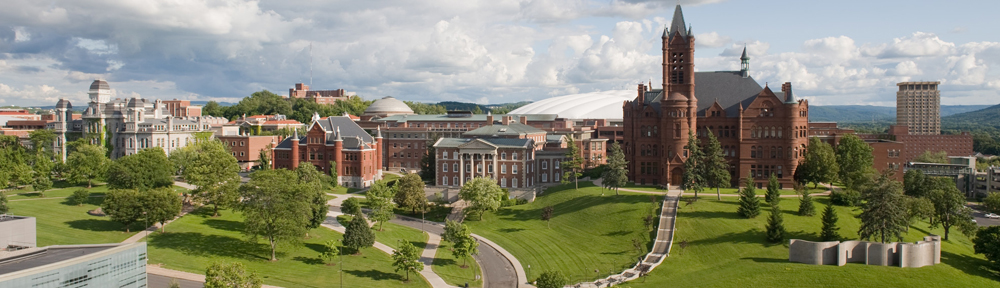
§ Some colleagues at Syracuse University thought I was just the one to work on a large research project there related to public housing. I saw that teaching at Syracuse University would provide me with the opportunity to focus on social conflict, domestic and international. I analyzed sources of poverty and joined the ongoing civil rights struggle led by George A. Wiley, who headed the local chapter of CORE (the Congress of Racial Equality). The fight was about the ill treatment African Americans suffered when their neighborhood was destroyed to make an interstate highway. I-81.
§ The CIvil Rights struggle is not only a status struggle but also an economic struggle. I think it is a very important conflict and political issue. Thus, President Ronald Reagan was critical of welfare as corrupt and misguided. He claimed that money for the wealthy would expand the economy for all. That is Supply Side Economics. Of course, scholarly economic research demonstrates the contrary. This is an issue of long-standing conflict.
§ I joined other struggles to help people overcome low status. Notably, Lois convinced me to become a feminist. I joined some meetings of the local NOW (National Organization for Women) chapter, led by Karen DeCrow, a former president of NOW. I try to continue to adhere to feminist conduct in social relations.
In addition to studying PEOPLE SEEKING TO RAISE their status, my research focused on the Cold War and the Israeli-Palestinian conflict. I was engaged in both of those conflict arenas. When the Soviet Union began to open contact with the West, I became familiar with Soviet colleagues in various international scholarly associations.
I also visited the Soviet Union a few times and met Russian colleagues there, and some Russians visited Syracuse. This international Cultural Exchange process induced Russians to view the Soviet system poorly and as backward compared to the American system. This significantly contributed to the end of the Soviet Union and the Cold War.
My focus on the Israeli -Palestinian conflict arose from frequent visits to Israel….. since Lois’s brother and his family lived there. I studied the movements toward a mutual accommodation between Jews and Palestinians and the contrary antagonism between them. I tended to support the actions for a peaceful accommodation. In the Unted States, I joined in the establishment of SAMED, the Syracuse Area Middle-East Dialogue group in 1981.
The source of my being recognized as a parent of the conflict resolution field lies in two matters. First, the elaboration and promotion of the idea of constructive conflict and second, my leadership in establishing the Program on the Analysis and Resolution of Conflict, PARC, at Syracuse University,.
Many people, even some scholars, regard injurious conduct as essential in defining conflict. However, three kinds of inducements may varyingly be applied: in waging a conflict; coercion, persuasion, and promised benefits. That is elemental in the concept of constructive conflict.
After several books about the course of conflicts, my first edition of Constructive Conflicts was published in 1986. The 4th and 5th editions, were co-authored with Bruce Dayton and published in 2012 and 2017. The most recent edition, the 6th with Bruce Dayton as first co-author, was published in 2022. Significantly. many American officials engaged in conflicts now speak of “soft power” as important in winning a conflict.
Most recently, Oxford University Press published a book by me, applying the constructive conflict approach for international conflicts in a book
Entitled Realizing Peace in 2015 and another book, about domestic American fights: Fighting Better published ln 2023.
The establishment of the Program on the Analysis and Resolution of Conflicts, PARC, was based on the convergence of several matters. Syracuse students joined the national protests following of the 1970 deadly shooting of students at Kent State. Some students cried out: Teach us Nonviolence. Two years later, Neil Katz was hired to teach nonviolence. He soon formed the Program on Nonviolent Conflict and Change (PARCC). Also, I had brought together an interdepartmental group interested in the warming US-Soviet relations.
At an international conflict resolution conference, Neil Katz and I met with a representative of the Hewlett foundation which was awarding multi-year grants to several universities to foster conflict resolution theory. We applied and won an award starting in 1986. I served as Director of PARC for its first 8 years. I was followed by Robert Rubinstein, Catherine Gerard, and the present director, Tina Nabatchi, with an altered name, Program for the Advancement of Research on Conflict and Cooperation.
It is well known across the country and in many other countries. I do feel wonderful about my part in developing peace end constructive conflict studies. Of course, I also feel wonderful about my many pleasures aside of my academic activities. Lois got me into outdoor stuff including summers in a national park, swimming and sailing at lake Skaneateles, climbing at the Adirondack mountains, and even whitewater rafting, as we did with Dan and Joe in the Colorado river at the Grand Canyon.
Then there were the pleasures of hanging out with friends, like some of you. Notably, Paula and Michael Freedman and Lois and I were good friends for forty years.
The death of Michael and then of Lois was shocking. Paula and I each tried to recover from the blows. After a time, and an occasional meeting, we began to see each other in a new light. Yes, attraction turned into love. For me, obviously, Paula is essential to my well being and a source of happiness.
I have great joy, also, due to my two marvelous sons and their wonderful families— Joe and Dina and their sons, Josh and Mike and Dan and Karen and their sons Zack and Scott. I am proud of every one of them. Happily, my eldest grandson, Josh, is marrying Corly Joos next September.
And to add more delight, by marrying Paula I have joined the family of wonderful Freedman and related kin folk! They are an amazing set of lively and interesting folk. For example, I must cite Carla, the newly sworn-in United States Magistrate Judge.
From my predominantly male world of family relations, I now have family relations with many women.
For example, Sophie is the talented person who put together the musical play list you have been listening to. Give her a hand. And Sara who kindly stayed here for this event before leaving to London for graduate studies.
You can see, I have very many reasons to feel WONDERFUL!!