Four important developments are converging that could help reverse the income and wealth inequality that has been escalating in the United States since the 1980s. First, global warming is having increasingly devastating effects across the country. The frequency of disastrous climate-related events is increasing in the form of extreme heat and consequent droughts and fires and of frequent hurricanes and floods. Second, the Covid-19 pandemic and its variations has sickened and killed millions of people globally and hugely disrupted the economies of the world’s countries. Third, American opinion is turning away from the dominating role the U.S. has played in fighting terrorism and making the world over in our image. Fourth, the great increase in the divisions within the U.S. society is hampering dealing effectively with the societal problems arising from the other developments.
Each of these developments is conducive to taking action to reduce the U.S. hyper inequality. First, by 2020 global warming advanced far enough for the country to frequently suffer droughts and raging fires in the country’s northwest. Frequent powerful hurricanes and floods struck the people in the southern and eastern states. Lives were lost and the costs of recovery rose. Calls increase for the federal government to strengthen the country’s infrastructure to improve its resilience and to slow, even halt, global warming. Even many Republicans, who had denied that human activity was fueling the rising temperatures of the earth, began to acknowledge the reality.
Second, Covid-19 is a major development with two broad sets of profound consequences in the United States: what it revealed and what it changed in class inequality. The great vulnerability of low-income people to Covid-19 meant that they suffer higher rates of illness and death than middle and upper classes of people do. Moreover, the closing down of much of the country’s economy tends to harm low-income people much more than people who have good incomes prior to the locked-down economy. Indeed, the stock market rose to new heights and some corporations profited hugely.
Third, the intervening role the U.S. has played in the world has contributed to the lack of attention to the increasing domestic class inequality. The U.S. war in Vietnam quite directly stifled President Johnson’s War on Poverty. The Cold War against Soviet Communism rose during President Reagan’s first term, when class inequality began its steep rise. The end of the Cold War failed to result in a peace dividend and in a few years the Global War on Terrorism was launched after September 11, 2001. Significantly, by the 20th anniversary of the September 11 attacks, the U.S. had withdrawn in defeat from Afghanistan. Grave misgivings are being widely expressed, even by leading Republicans, about the mistaken invasion of Iraq and the harms the U.S. suffered by the way the war against terrorism had been waged. Preferences to attend to domestic concerns is now rising.
Finally, the U.S. society and political system has become divisive and antagonistic. Political Party fights often prevented collaboration to meet the country’s real problems. People increasingly want to re-build trust and collective action to reduce our shared problems, including extreme income and class inequality.
These four profound developments converge to support government actions that would reduce the extreme class inequality in the United States. One indicator of that had been the popularity of Bernie Sanders in his run for the Democratic Party’s nomination for president in 2016 and 2020. His primary theme was to greatly increase income and wealth equality. He aroused a large following. Trump also expressed the resentments of working people who felt they were being left behind. Of course, he did not offer to overcome the reasons for the resentments by reducing class inequality, but by blaming immigrants and bad international trade deals.
The hyper inequality of income and wealth in the United States has many unfortunate consequences for the country as a whole. It distorts the political system to serve the interests and concerns of the wealthiest people; for example in relation to military contracts. This uses funds that might otherwise serve the needs of other, less fortunate, Americans. It warps the economy as a whole by advancing production and profits for their interests at the expense of production and incomes for most other people. More and more people are relatively worse off than the ever-richer wealthy people. Social problems, including physical and mental illness and crimes are associated with income inequality among the U.S. states and among the economically advanced countries in the world. Furthermore, the country continued to include a substantial proportion of people living in poverty.
Many of the Biden Administration’s actions and proposals are responsive to the convergence identified here. Recognizing the magnitude of the present challenges should embolden taking even greater actions. For example, increase estate taxes and introduce Federal wealth taxes. This is an excellent way to increase the funds needed to confront the converging challenges. The great convergence indeed provides a great opportunity to creatively and constructively meet those great challenges we face.
Author Archives: lkriesbe
Ways to Advance Equal Justice in America
The struggle for equal justice for Blacks, under the banner of Black Lives Matter (BLM), has demonstrated widespread public awareness of and opposition to injustices. Yet, tragic unjust events recur. Some scattered progress is occurring. But bringing about widespread changes that are widely desired is mired in many other grave conflicts, in new crises, and by willful distractions. Nevertheless, there are many alternatives that many different people can take to advance justice for all.
Injustices occur at the neighborhood, city, county, state, and national levels, within and between governmental and non-governmental organizations. Therefore, the injustices can be diminished in all these diverse settings by various interacting people. I begin with considering city and county settings, which have their own police departments. One proven strategy is to form ad hoc boards or commissions, which may be convened by mayors, county legislatures, non-governmental public interest organization, or even some grouping of religious, business, or other local leaders. A few persons from each of the major stakeholders in police-citizen relations are brought together to meet for a limited time period and come up with recommendations for restructuring or modifying police-citizen relations. It is important that the people chosen have credibility in their respective constituencies. The meetings might well be facilitated by persons or organizations with experience in mediating or negotiating contentious matters. The topics for possible recommendations are numerous. For example, one issue might be splitting off the police from dealing with mentally ill persons, which raises issues about funding, about alternative agencies for serving the mentally ill, and about routing of calls for help. Another issue may be regulations about police accountability, ongoing coordination among stakeholders, and funding to improve services.
Over the years, many efforts have been made to improve policy-community relations, including instituting policing training. Many organizations, such as the Urban Institute, provide programs to improve trust and understanding. It could be useful to engage local BLM and other activist groups in shaping and implementing such training. Going forward, local BLM chapters and other activist groups need to expand their range of tactics beyond rallies and protest marches. They could build more and closer ties with civic organizations, including political parties, unions, religious institutions, and media sources. This could help in conducting negotiations and lobbying of local, school, state, and national officials, which can benefit by joining in unlikely coalitions for specific causes. In a longer-time perspective some activists may enter the political arena or undertake a career that serves to overcome criminal injustices.
Many of the strategies mentioned above are also applicable at the state level. Governors or leaders of other state-wide organizations could convene working groups to make recommendations for reducing injustices relating to race or other identities. This may result in guidelines regarding police training, accountability, or public engagement. Given the great range in funds in cities and counties for police-related services, possible ways to make funds more equitable might be reviewed.
Police and national guard responses to protests warrants more attention. In too many instances police or national guard interventions escalate the contention and result in episodes of violence. Much is known about ways to moderate and contain crowds and social protests and the counterproductive consequences of using coercive tactics. State legislatures are important in regard to the underlying conditions that sustain or that reduce Black-White inequities. Public policies regarding income and race inequities in education and housing impact police conduct with Blacks.
Conduct at the national level is also highly relevant for the injustices we are discussing. This includes giving assistance to locations where police-community relations are improved by the work of the Community Relations Service (CRS), a component of the Department of Justice. For example, CRS has the program “Strengthening Police and Community Partnerships program,” which was recently piloted in Erie, PA, and Topeka, KS. Much more attention and perhaps impact however, follow from President Donald Trump’s rhetoric about dominating the streets and imposing “law and order.” His behavior encourages armed White supremacist groups who appear at some BLM demonstrations. Acting to counter White supremacist threats is part of overcoming Black injustices.
A great deal must be done at the national level in regard to crime bills, gun control, and massive incarceration. These matters could be important expansions of the agenda of local BLM chapters and other activists. They are matters in contention in the November 3rd election. All voters should consider them when they vote.
There are many shared interests in reducing injustices suffered by Blacks. Injustices contribute to manifestations of mistrust, fear, and deadly tragedies. Police are safer when they work in environments of mutual trust. Police accountability, which holds individuals who act badly responsible for their acts, enhances the safety, reputation, and respect of police officers in general.
We each should often recall our pledge of allegiance to our country that gives us liberty and justice for all.
Advancing Black Equality in America
We Americans are living in a highly consequential time. We are beset by many conflicts, which, if waged well can be broadly beneficial, but if waged badly, will have destructive consequences. The struggle for equal justice for Blacks, under the banner of Black Lives Matter (BLM), erupted nationally immediately after the rapid spread of videos of George Floyd’s murder by police in Minneapolis, Minnesota, on May 25, 2020. Massive protest demonstrations quickly spread to over 2,000 cities and towns across the country, and also in many other countries.
Surprisingly, the protesters were diverse in ethnicity, age, and experience. The demonstrations were essentially nonviolent and peaceful; in some localities, police expressed solidarity with demonstrators, while in other localities confrontations escalated into forceful encounters. In a few cities, opportunistic gangs looted and burned stores, and in several localities, armed white supremacists tried to disrupt the demonstrations.
The Black Lives Matter (BLM) social movement had emerged in 2014, after a large-scale uprising in Ferguson, Missouri. The uprising followed the military-style suppression of the nonviolent protests after the killing of Michael Brown, an18-year old Black man. The BLM organization was founded then, becoming a wide network, led by local community members, some sharing a new vision. After each subsequent killing of an unarmed Black person by white police officers, protest demonstrations occurred in many localities, focusing on reforming police departments.
Americans have long engaged in many conflicts relating to gaining equal justice for Blacks, at the local, state and national levels. They usually have been waged constructively and achieved broad and lasting benefits. Sometimes, however, conflicts escalated badly with widespread losses or only short-lived gains. In most cities, the BLM protests against murderous treatment of Blacks by police have been conducted within the traditional norms protecting the constitutional right of free speech and the right of the people to peaceably protest. Frequently, as a result, legislative and administrative actions have been taken to end improper police conduct. Often, this has followed conversations and negotiations between protesters and government officials. The locality-based nature of the BLM social movement and its protest actions have begun to bring about significant reforms in local police departments. Local BLM chapters and other community-based, Black-led organizations studied police reform efforts, how to organize protests, and how to get results. This included posting a Conflict Resolution Toolkit on the BLM website.
Of course, the federal government can play an important role in influencing how protests against unjust police actions are conducted and have constructive consequences. The 2014 violence in Fergusson drew President Barack Obama’s attention and he ordered a review of the actions and practices of the Fergusson Police Department (FPD). In March 2015, the DOJ announced finding that the FPD had engaged in systemic misconduct against the citizenry of Ferguson, including discriminating against Black citizens. It then imposed a consent decree requiring non-discriminatory conduct and indeed the FPD’s conduct was and is greatly improved.
President Donald Trump, however, prefers waging conflicts coercively and has encouraged police to act roughly. When some of the BLM protests escalated to include violence, he made it clear that protesters should be dominated, and police could use military tools and tactics. This approach appealed to armed white supremacist groups who appeared at some demonstrations. The goal of this militant strategy is not clear, it expresses emotions, even if it is usually counterproductive. The official and civilian violence against the civil rights campaigners during their struggle in the South, in the 1950s and 1960s, was clearly destructive and ultimately self-defeating.
Going forward, the BLM activists and their supporters may well need to expand their range of tactics. That is true in conducting negotiations and lobbying of local, school, state, and national officials, which can benefit by joining in unlikely coalitions for specific causes. More generally, the present national situation opens up an opportunity for a very broad coalition, with electoral implications. Many Americans, Republicans as well as Democrats, are concerned that the authoritarian conduct of President Trump and his appointed officials are undermining American democracy. It follows, that BLM and other movements for justice should join together for an election result that repudiates Trump and Trumpism.
How Americans who are not part of the BLM movement respond to it is critical. Expressing recognition of the injustices African Americans experience in the criminal justice system is a step toward peace and justice. Particular groups have special opportunities to enhance both peace and justice. Some police unions have given too high priority to simply protect any members who acted badly, rather than maximizing the good standing of their members as a whole. Lawyers in the criminal justice system might provide more information about injustices and suggest ways to overcome them. Constructive public engagement in solving present-day problems is the essence of democracy.
An Opportunity to Transform Race Relations in America
The nonviolent civil rights struggle in the 1950s and 1960s achieved great advances, particularly in the South. It was disciplined, it set specific goals, and its leaders met with national political leaders. It was countered with great violence by local segregationists and even local officials. That violence was self-defeating. People across the country joined in supporting the civil rights movement. President Lyndon Johnson, in his speech to Congress proposing the Voting Rights Act of 1965, said, “We shall overcome.” Indeed, Jim Crow segregation laws were generally ended and whites and Blacks in the South benefitted economically.
The current nonviolent civil rights movement is different and faces a different presidency in Washington than was the case 65 years ago. Now. there are numerous nongovernmental organizations striving to reduce the punishing inequality suffered by many Blacks in every sphere of their lives. Treatment in the criminal justice system is presently drawing much attention, which has focused on the Black Lives Matter (BLM) social movement. It emerged nationally in 2014, after a large-scale uprising in Ferguson, Missouri, following blatant violent suppression of the nonviolent protests after the killing of Michael Brown, an 18-year old Black man. The BLM movement grew, becoming a wide network of local chapters, led by local members, sharing a new vision. In deference to their use of Black in their self-identification, I adopt it here, rather than another common term, African American.) Local leaders were often young Black women activists, expressing their outrage at police misconduct. As more instances of police killings of Blacks occurred and received attention, demands for reforming police conduct and the whole justice system greatly increased.
Several factors converged to produce the sudden massive and diverse, protest marches around the country, which persisted for weeks and had significant consequences. First, videos of the murder of George Floyd on May 25, 2020, in Minneapolis, Minnesota, were rapidly spread by social and mass media. They showed a white police officer pressing his knee on the neck of a prone Black man. saying, “I can’t breathe.” The police officer looks casually at the cameras, with one hand in his pocket, as three other policemen stand by and onlookers cry out, “you’re killing him.” This persisted for over 8 minutes, as the struggling man on the street became inert.
Media attention across the country, and abroad, focused on the death and responses to it. Many relatives and friends expressed their grief and outrage, the police chief apologized, and numerous officials decried what had happened, as did former presidents and white and Black civic leaders. Some official actions were speedily taken. On May 26, the Minneapolis mayor and police chief announced the firing of the four police officers who were responsible for Floyd’s death. Protest demonstrations quickly spread to over 2,000 cities and towns across the country, and also in many other countries.
Surprisingly, the protesters were diverse in ethnicity, age, and experience. The demonstrations were generally nonviolent and peaceful; in some localities, police expressed solidarity with demonstrators, while in other localities confrontations escalated into forceful encounters. In a few cities, opportunistic gangs looted and burned stores, including Black-owned ones.
The prevailing Covid-19 pandemic that had been underway for almost 3 months might have been expected to lessen mass demonstrations. Yet, on the contrary, school-age youth were not in school and many people joined the already unemployed. They could march with masks, social distance and outdoors.
Furthermore, Blacks had been experiencing some improvement in their class, status, and power standing in prior years and expected more improvements. Yet the pandemic had revealed that their living circumstances made them more vulnerable to becoming sick and dying from Covid-19. Moreover, their employment circumstances deteriorated even more than did those of whites as the economy declined. President Trump’s tweets and statements defending white nationalists emboldened them to express racist sentiments, raising Blacks’ concerns. Rising expectations blocked by declining conditions is the well-established formula for revolt.
Another striking feature of the BLM protest marches was the participation of whites as well as people of color. National public opinion surveys indicate that white public opinion had become less and less prejudicial since 1988 and in 2018 whites generally did not attribute most Blacks’ poor conditions to their own failings. More specifically, in late June 2020, 52 percent of white voters believed that George Floyd’s death was part of a pattern of excessive police violence against Blacks.
In many cities, meetings and negotiations began to discuss needed reforms of the policing system and shifting funding. There has been much agreement that police departments are tasked to deal with problems that they are ill-prepared to handle. Problems related to mental illness, homelessness, and extreme poverty need to be dealt with by other government and charitable programs.
Unfortunately, the energy and power of the BLM movement arose at the time that President Trump was seeking re-election during a mishandled response to a pandemic. He chose to escalate confrontations with protesters, proclaiming he was a law-and-order president. He threatened to dominate and take over the streets from the protesters. White supremacists saw an opportunity to gain influence and took actions to disrupt demonstrations, resorting at times to violence. Many Americans were worried at the extreme right-wing rhetoric and actions of Trump and his appointed officials.
These developments suggest that many in the BLM movement could more widely adopt some new constructive strategies. More movement members could enter enhanced negotiations and lobbying of local, school, state, and national officials. The variations at the local level make that likely in any case. More generally, the present national situation opens up an opportunity for a very broad coalition, with electoral implications. Many Americans, Republicans as well as Democrats, are concerned that the authoritarian conduct of President Trump and his appointed officials are undermining American democracy. Certainly, his re-election would not enhance justice for Blacks. It follows, that BLM and other movements for justice should rise up together and vote to repudiate Trump and Trumpists at the polls.
The way Americans who are not part of the BLM movement respond to it is critical. Expressing recognition of the injustices African Americans experience in the criminal justice system is a step toward peace and justice. Particular groups have special opportunities to enhance both peace and justice. Some police unions have given too high priority to simply protect any members who acted badly, rather than maximizing the good standing of their members as a whole. Lawyers in the criminal justice system might provide more information about injustices and suggest ways to overcome them. Citizens can attend public hearings about legislation to improve the criminal justice system. Public engagement in solving present-day problems is the essence of democracy.
Transforming Conflict
| Project Save the World Invites You To Watch Our Latest Video Conversation |
| Transforming Conflict |
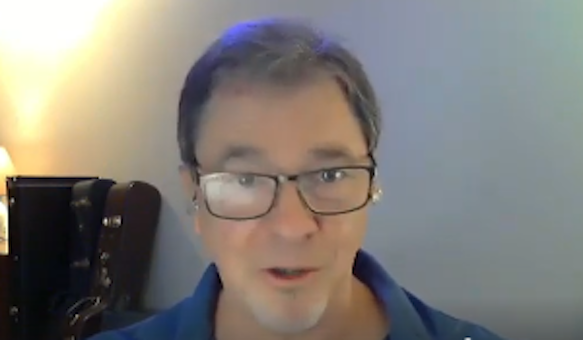 |
| Louis Kriesberg and Bruce Dayton are professors specializing in constructive ways of handling conflicts—which may, they explain to Metta, involve combinations of persuasion, reward, and/or coercion. |
| Video Link: https://youtu.be/aJ_1KM4ot7Q Audio Podcast Link: https://projectsavetheworld.libsyn.com/transforming-conflict |
On Taking Action
This post also appears on the Beyond Intractability website. The blog is the Constructive Conflict Initiative / COVID-19 Blog and Lou’s essay is at https://www.beyondintractability.org/cci-mbi-cv19-blog1/kriesberg
We Americans are beset by many awful circumstances in our country and in the world. As analysts and sometimes as activists we examine such developments, analyzing why they are bad and how they have happened. So many bad things are occurring every day, it is hard to fight against any one of them, as new ones distract us. I sketch out an approach to taking actions that have a good chance to be effective and satisfying in overcoming objectionable circumstances.
First, we should select three or four matters that we believe should be bettered. We can each choose those matters that particularly concern us. The matters may or may not be connected and they will vary in magnitude. We should include some local aspects of one or more of the matters that are of concern. We do know that even now, some good things are happening in some cities, some neighborhoods, and some local institutions. They are important, because they have a better chance of being successful, which is encouraging and helps sustain progress. Most bad matters entail contentions, conflicts that embody and sustain them.
Second, we should work with other people to resolve the undesirable matter of concern. It isn’t necessary to build one’s own organization. There are many organizations acting to overcome the bad developments that might concern each of us, which we could join. For example, Indivisible, which functions across the country and was founded soon after Donald Trump’s election, does political action stuff at the local, state, and national level. There also are local union chapters, religious and ethnic organizations, which might be joined or aided. There are also political reform groups and ones working on specific environmental issues. Notably, there are formal official institutions with the charter to manage the undesirable circumstances, which may be joined or aided.
Third, we should reflect on alternative strategies that might ameliorate or overcome the destructive matters of concern. Certainly, one part of any effective strategy is to mobilize support for the possible action to win over the adversaries. The primary objective at this stage is to gather the needed power. There are three sources of power: coercion, persuasion, and positive sanctions, which are combined in many ways in the course of waging a conflict constructively. It would be helpful to hone and apply our persuasive skills in writing and speaking on various platforms; we ought to develop skills to communicate broadly, not only to and for professional colleagues. We should seek to amass resources that can be used as negative sanctions and/or used as positive sanctions. Adversaries should not be dehumanized and their heterogeneity should be recognized so that some cooperative actions might become feasible with some elements of the opposing side.
Finally, we must do something. We should formulate both long term and short-term goals. Long term goals project a vision of a hopeful future. Short term goals should be attainable in some visible way, so a gain can be won. This helps gather more support. In any case, moreover, overreaching should be avoided, since large losses by opponents can provoke them to win great pushbacks. Best of all, opponents may come to see that they have also gained some benefits by the new circumstances.
Acting is a wonderful way of avoiding feeling despair. It can be fun. It keeps hope alive. Having written this, I recognize that I have pursued changing versions of this approach throughout my life.
Hello world!
Welcome to WordPress. This is your first post. Edit or delete it, then start writing!